
When you hire a janitorial company, you’re trusting them with more than just mops and buckets, you’re trusting them with your health, safety, and reputation.
But here’s the truth:
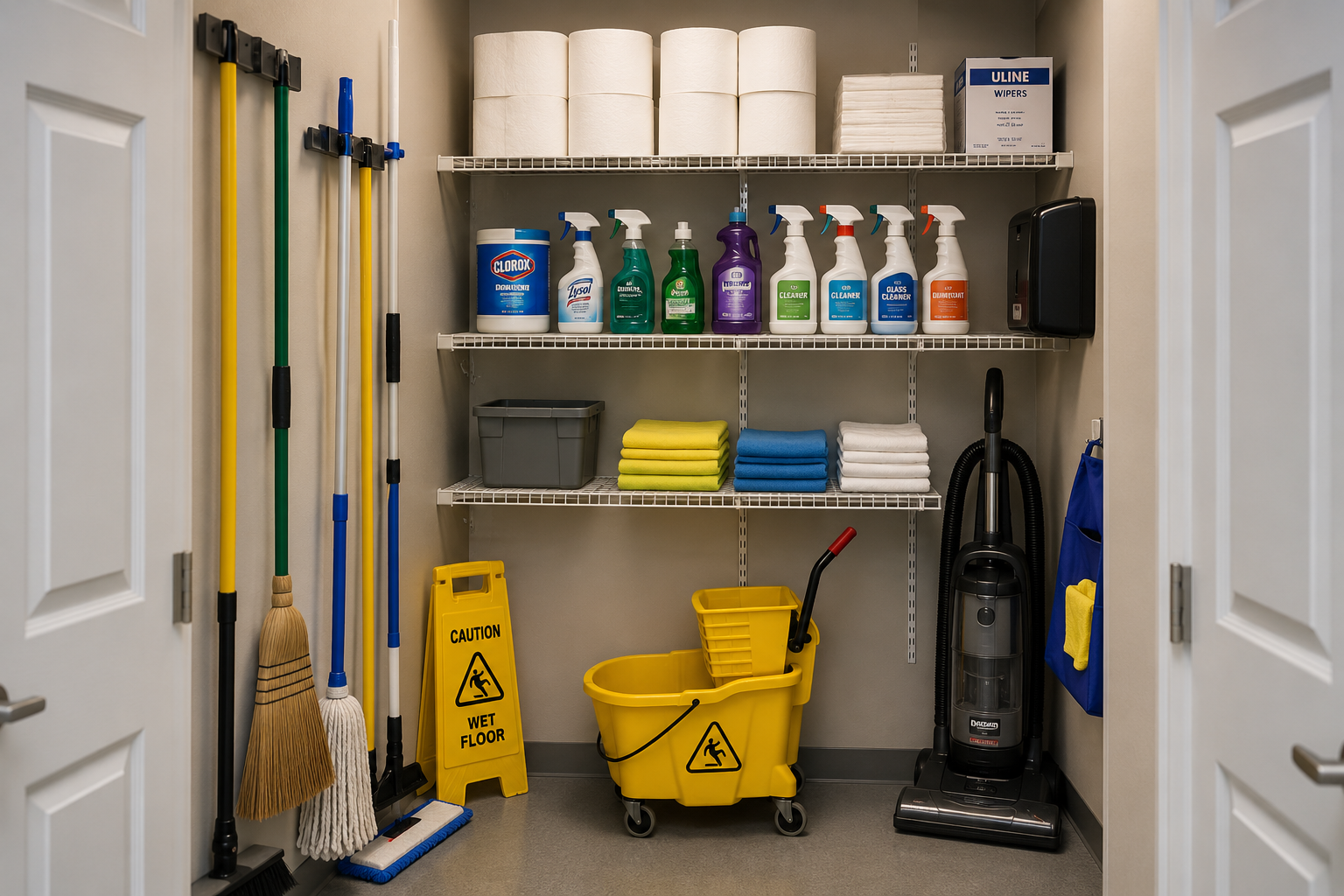
If you want to know whether you’re dealing with a professional janitorial service, don’t start in the lobby. Start in the closet.
Your janitorial closet tells a powerful story.
Here’s a practical checklist you can use to spot the difference between a true professional and a “good enough” cleaner.
15 Things to Look for in Your Janitorial Closet
- SDS Binder Is Clearly Available
A professional company always has a Safety Data Sheet (SDS) binder readily accessible.
Whether it’s mounted near the supplies or stored where the client requests (especially at smaller sites), it should be easy to find.
- SDS Sheets Are Up to Date
Even though SDS sheets no longer “expire,” they must reflect current products in use.
If chemicals change, the documentation should too.
- Eyewash Station Is Easily Accessible
If chemicals are stored onsite, an eyewash station should be available and accessible in case of emergency.
- All Bottles Are Properly Labeled
No mystery spray bottles. Ever.
Every container should clearly state what’s inside — diluted properly and labeled professionally.
- Mops Are Never Left in Dirty Water
A mop sitting in dirty water is breeding bacteria.
Professional cleaners rinse, wring, and hang mops to dry properly after use.
- Mop Buckets Are Emptied and Washed Out
Buckets should never contain old solution. They must be emptied, rinsed, and cleaned after each shift.
- More Than One Mop Is Present
There should always be separate mops for:
- Washrooms
- General areas
Cross-contamination is not acceptable.
- Quality Microfiber Cloths Are Used
High-quality microfiber cloths can capture up to 99% of bacteria with water alone when used properly.
That’s modern cleaning science, not guesswork.
- Cloths Are Clean and Properly Laundered
Used cloths should never be sitting dirty in the closet.
A rotation system should be obvious.
- Clear Colour Coding Is in Place
You should immediately know:
- Which cloth is used for toilets and urinals
- Which cloth is used for desks, telephones, or touchpoints
No guessing. No crossover.
- The Closet Itself Is Clean and Organized
A messy closet reflects messy standards.
A professional company keeps the closet tidy at all times, even when no one is watching.
- Commercial-Grade Cleaning Solutions Are Used
Products should be:
- Commercial-grade
- Properly diluted
- Appropriate for the surface
You should not see harsh, outdated chemicals like straight bleach unless specifically required. Modern disinfectants are safer and highly effective.
- Proper Dilution Systems Are in Place
Manual guesswork is risky.
Professional operations use measured dilution systems to ensure:
- Safety
- Cost control
- Consistent performance
- Sufficient Wet Floor Signs Are Available
There should always be enough wet floor signs onsite or cleaners should bring them with them.
Safety first. Always.
- Signs of a Managed Operation
Professional companies leave evidence of oversight and communication, such as:
- Regular inspection reports (ROVs)
- Communication binder
- Emergency response contact sticker
- Monitoring of client consumables
A closet shouldn’t feel abandoned. It should feel managed.
The Bigger Picture
A professional janitorial company doesn’t just clean what you see.
They manage what you don’t.
The janitorial closet is where standards live.
If it makes you cringe, that’s a red flag.
If it makes you confident, you’ve likely hired the right team.
If you’re ever unsure, just remember:
Great cleaning leaves clues. So does poor cleaning.
Start in the closet.